Showing posts with label mental illness. Show all posts

Release Blitz + Giveaway: Pest Control by C.D. Habecker and Luna Nyx

Join authors C.D. Habecker and Luna Nyx and IndiGo Marketing as they celebrate the release of Pest Control! read more about the shifter rivals to lovers romance and enter in the NineStar Press credit giveaway!

Title: Pest Control

Author: CD Habecker and Luna Nyx

Publisher: NineStar Press

Release Date: 10/19/2021

Heat Level: 3 - Some Sex

Pairing: Male/Male

Length: 52200

Genre: Paranormal, LGBTQIA+, gay, PNR/wolf shifter, hunters, disabilities, humorous, illness/disease, interspecies, mental illness, rivals to lovers, fisting, knotting, #ownvoices

Add to Goodreads


Description

Rhys has a simple life in the backwoods. All he needs is his trusty compound bow, impressive book collection, warm cabin, full food cellar, and himself. So, when Rhys discovers a sly wolf stealing his kills, which are supposed to last him through the coming winter, he’s forced to set a trap and kill the pest.

But, instead of the wolf, Rhys finds a mysterious (and naked) man named Everett.

After learning Everett has nowhere else to go, Rhys hesitantly invites him to stay and heal. But he doesn’t get much time to adjust to life with his eccentric (and stupidly handsome) house guest, not when winter arrives early and with a vengeance.

Cooped up in the cabin together for months, will Rhys learn to love himself and another? Or will hidden truths and empty stomachs snuff out the flames of love and life?

Excerpt

Pest Control
C.D. Habecker and Luna Nyx © 2021
All Rights Reserved

Rhys pulled the string of his compound bow back taut, his hands steady as he readied his arrow. Tucked as he was behind the thick foliage, the buck’s tawny coat was well camouflaged in the autumn hues, making aiming for his target difficult. Though, it also benefited Rhys; combined with being downwind of the magnificent creature, the foliage kept him just as hidden.

The buck, completely unaware of his presence, stepped out enough to bend its graceful neck to drink from the trickling stream. Still on guard, cautious as animals of prey always were, its ears flickered at the tiniest of noises, its muscles tensed and ready for flight at any moment.

Rhys had only one chance at getting this right.

One wrong move, and the buck—a good month’s worth of venison dinners—would disappear into the forest, never to be seen again.

This wasn’t Rhys’s first rodeo, not in the slightest, yet he couldn’t help the nervous hitch in his quiet, slow breathing when it seemed, for a moment, that the buck had seen him. Its head jerked up and turned, dark eyes looking straight in his direction. It didn’t flee, only stared ominously as if caught in a truck’s headlights. Rhys knew he wouldn’t get a better chance than this one.

It was always a strange feeling to look into the eyes of his prey, of something he was going to kill. Ignoring the shudder that rolled down his spine, he took the shot anyway. Releasing his grip on the string, he allowed his arrow to take flight in a silent, quick whirr through the air.

Before the buck could even blink in reaction, the sharp metal arrowhead lodged deep where the shoulder of its front leg met its torso, cutting through thick layers of fur, skin, fat, and muscle—and hopefully its heart or lung, maybe even shattering its shoulder. Rhys had counted on his aim making the cleanest, quickest kill, one that would keep the animal’s suffering at a minimum.

The buck immediately took off running down the stream with a loud startled noise, and so did Rhys, chasing after his wounded prey. Still much faster than he was, even with its injury, the buck disappeared into the trees. Leaving a trail of blood and crushed foliage in its hasty retreat, it led the hunter on through the forest for what seemed like at least a good few miles.

But, when Rhys finally made it to the end of the blood trail, there was no buck in sight, only pools of blood mixed in with the muddy ground, and hoofprints leading off deeper into the forest, away from the stream. Rhys furrowed his eyebrows as he knelt beside them and traced their outline with his fingers.

Not hoofprints, he realized with an angry huff—wolf prints, and familiar ones at that, the large canine’s paws unmistakable to his trained eyes. Streaks of blood followed alongside them, which left Rhys with only one answer.

“It’s you again, huh?” he grumbled through gritted teeth, digging his fingers into the wet mud, replacing the print with his own.

This wasn’t the first time the wolf had stolen his kill. In fact, it was the fifth time this season. Rhys thought that by traveling far in the opposite direction he normally took toward his trusty hunting perch, he’d be able to avoid the bane of his existence, but yet again, he had been outsmarted.

It was as if the thieving canine had been following him, stalking him even, to drag away his kills, mooching off of his hard work and dedication. The reoccurring situation pissed him off to no end, especially when winter was only a mere month or two away from turning the landscape white and cold.

He needed this kill, needed the other four lost kills as well, to keep himself from starving in the dead of winter when it would be next to impossible to do any sort of hunting. This late in the game, his food storage cellar should be full already; he shouldn’t have spent all of his time hunting when firewood and water needed to be collected and stored, and his fall vegetable harvest needed to be pickled.

With how things were looking now, it was loud and clear: Rhys was utterly and completely fucked.

Purchase

NineStar Press | Books2Read

Meet the Author

C.D. Habecker is a bisexual woman residing in Portland, where she is pursuing a BFA in fiction writing at Portland State University. Ever since she was a child, C.D. has been an avid writer and reader. Writing fanfiction helped her realize her passion for creating queer romances and spinning familiar tropes. Her favorite trope is any type of animal shifter or hybrid, with magic coming in a close second. C.D. strives to give good representation to the queer as well as disabled communities, often featuring characters who share her mental and physical illnesses. She believes that not every queer story needs to focus on the struggles and hardships of being queer, as there is more to a queer person’s life than that. Everyone deserves a sweet yet deeply nuanced romance they can relate to, as well as swoon, cry, and laugh with.

C.D. spends her days writing, reading, playing with her dogs, listening to BTS, and thrifting for her vintage clothing business. Visit C.D. on Twitter.


Luna Nyx is an asexual lesbian young adult living in the Denver area of Colorado. She’s currently studying to become a Vet Tech, and writes on the side as means to pursue her creative passion. She fell out of love with writing and reading as an adolescent because growing up with ADHD made school a big challenge for her, and she’d begun to associate her passions with failure and disappointment. However, after meeting C.D. Habecker, Luna rediscovered her passion for literature. Inspired by her struggles growing up and the lack of decent LGBTQIA+ representation in media, Luna writes stories to show people with neurodivergence and “queer” identities that they aren’t alone.

Luna currently lives at home with her parents and spends her days studying in college, lovingly annoying her three pet cats, and burying herself in her musical and artistic passions. Visit Luna on Twitter.

Giveaway

a Rafflecopter giveaway

  Blog Button 2

Release Blitz + Giveaway: Gretel on Her Own by Elna Holst


Author Elna Holst and IndiGo Marketing host today's release blitz for Gretel on Her Own! Read more about the paranormal story and enter in the $10 NineStar Press credit giveaway!


Title: Gretel on Her Own

Author: Elna Holst

Publisher: NineStar Press

Release Date: 04/26/2021

Heat Level: 3 - Some Sex

Pairing: Female/Female

Length: 23900

Genre: Pararnormal, LGBTQIA+, fairy tale, folklore, lesbian, witches, mental illness, confectioner, Germany, the Brothers Grimm

Add to Goodreads


Description

Once upon a time, a brother and sister were led away into the depths of the forest. It was only to protect them, their mother explained and the brother concurred; yet he insisted on pebbles, bread crumbs. He insisted on looking back for cats and pigeons and whatnots, brightened by the touch of the sun.

Twenty years later, Gretel Kindermann is on her own: her father has taken himself off to Dortmund, her mother is a fixture at the local mental healthcare institution, and her brother Hänsel, oh—

At the heart of the matter, like a thorny-rooted weed, is Frau Heckscher, the purveyor of all things sweet in the little village at the lip of the forest. And now, perhaps, also a niece that no one has heard of before, lately arrived from Vienna to wreak havoc on poor Gretel’s nerves and heart.

In Gretel on Her Own, Elna Holst offers a contemporary sapphic twist to your favourite Germanic fairy tale of homicidal arsonists and houses built out of baked goods, trickster witches, and parenting skills that leave a lot to be desired.

Excerpt

Gretel on Her Own
Elna Holst © 2021
All Rights Reserved

All her life, Gretel Kindermann had lived in the little village at the lip of the forest. In fact, as far back as anyone cared to remember—for there are always, for one reason or another, periods in the history of a place that no one can rightly recall—the Kindermanns had lived in the village. According to church records, a B. Kindermann, woodcutter, had been in residence sometime in the middle of the sixteenth century. Kindermanns were woven into the very warp and weft of village life, cropping up through the centuries, being christened, marrying, bearing children. Dying. Being born.

So, it was odd, unprecedented even, that on a raw, misty Sunday in early September, when a yellowing leaf here and there heralded the approach of autumn on the trees that lined an otherwise featureless residential street, Bernhard Kindermann was backing a rent-and-go moving van out of the driveway of no. 9, or, as it had been known to neighbours and friends for nigh on thirty years, quite simply ‘the Kindermanns’ place’.

Gretel, the grown daughter of this latest incarnation of a Kindermann paterfamilias, untied her mother’s apron and hung it over her arm, shivering in the nippy air as she walked down the drive to see her father off. Bernhard rolled down the window on the driver’s side and peered out at her, his gaze inscrutable. He picked at his gingerbread-coloured moustache.

“Do you have enough fuel to see you all the way to Dortmund?” asked Gretel, for something to say. She was in a perfect double bind, her hands clasped under the fold of the apron, pressing it to her: she wanted the moment to be over, and she wanted to prolong it indefinitely. They could not be said to have said all there was to say. Nor would they.

Bernhard glanced at the gauge to his left and shook his head. He shrugged his burly shoulders—those shoulders that had carried her through her childhood, it seemed to Gretel now as she was on the point of losing them.

“I’ll need a few breaks along the way.”

Gretel cleared her throat, dipped her head. She came up with nothing. “Well, call me when you get there.”

Her father looked as if something was on the tip of his tongue; but then he appeared to change his mind. He sat back in his seat and began to roll up the window.

“Ich liebe dich, Papi. Gute Fahrt!”

In embarrassment, Gretel heard the strain in her voice, the tear-laced squeakiness of it. She hadn’t called the man in the vehicle in front of her Papi in years. And she certainly was not in the habit of telling him she loved him. It was true—of course it was—but it generally wasn’t a sentiment they put into words.

Bernhard moved his work-worn hand in a gesture somewhere between a wave and the sign of the cross.

“Goodbye, Gretelchen,” he said. Or she thought that was what he said. He had started the engine and was turning the steering wheel to go.

*

“So he’s off then? Good riddance to him. Off to chase that whore of his across the country, I dare say. All I’ll say is he better not come crawling back when she leaves him!” Ursula Kindermann held out her hand, impatient for another smoke. Gretel grabbed the half-empty pack from the outdoor table.

“You smoke too much,” she muttered, endeavouring to distract her mother from the topic of Bernhard. As far as she knew, there was no ‘whore’ in the picture.

“So do you!” Ursula cackled, a canny glint in her eye. Like a rebellious child, she snatched the cigarettes out of her daughter’s grip.

Gretel smiled, despite herself. It was in moments like these, fleeting episodes of astute observation, brief but witty repartees, tiny sucrose crystals of clarity, that she thought—she dreamt—she feared: We got it wrong. This woman’s mind might be salvaged. There’s nothing much the matter with her at all.

Ursula studied her through a haze of smoke. She raised her hand to wave it away and ended up teasing her peroxide curls. “It’s your brother I’m worried about,” she huffed, half ingesting her cigarette with each greedy drag. “He’s gone to the wolves.”

“What wolves?” Gretel asked, placing the pack back on the table beside her, out of her mother’s immediate reach.

Ursula stared out across the empty patch of lawn, surrounded on three sides by a chain-link fence. Beyond it were the woods, and in the distance the iron rumble of a passing train could be heard.

“I can hear them in my bed at night, yipping and yapping, howling at the harvest moon. They’re on his trail, snapping at his heels. I’m telling you, they won’t leave the poor boy alone.”

“There are no wolves around these parts, Mami.” Gretel spoke softly, joining Ursula in gazing into the fir tree forest pressing close to the fence. “They were shot off years ago. It’s a scandal in its own right.”

The French door to the veranda creaked open behind them.

“Frau Kindermann? It’s time for your medication. Oh, hello, Gretel.” The nurse gave her an aloof smile. He carried a metal tray with a jug of water, a glass, and her mother’s tailor-made cocktail of pills in a plastic cup.

Gretel glanced at her wristwatch. “I guess it’s time for me to leave.”

“I know what I hear.” Ursula didn’t acknowledge Gretel’s statement, nor the nurse’s either. Her hand brushed back her hair from her ears, the glowing embers of her fag coming close to singeing the faux-blonde strands in the process.

Gretel rose from her seat. “Thank you, Nurse Richter. Mami, I’ll see you Friday, okay?”

Richter nodded to her as he put the tray aside and gently removed the potential fire hazard out of Frau Kindermann’s fretting hands.

“I know,” Ursula repeated, poking her finger in the man’s chest. “Don’t tell me I don’t know!”

Purchase

NineStar Press | Books2Read


Meet the Author

Often quirky, always queer, Elna Holst is an unapologetic genre-bender who writes anything from stories of sapphic lust and love to the odd existentialist horror piece, reads Tolstoy, and plays contract bridge. Find her on Instagram or Goodreads.

Website | Goodreads | Instagram

Giveaway

a Rafflecopter giveaway

  Blog Button 2

Release Blitz + Giveaway: The Painted Phoenix by Sarah Kay Moll


Join author Sarah Kay Moll & IndiGo Marketing in celebrating the release of The Painted Phoenix. Find out more about this contemporary thriller, read an excerpt & enter in the $10 NineStar Press credit giveaway too!


Title: The Painted Phoenix
Author: Sarah Kay Moll
Publisher: NineStar Press
Release Date: July 20, 2020
Heat Level: 2 - Fade to Black Sex
Pairing: Male/Male
Length: 75200
Genre: Contemporary thriller, LGBTQIA+, contemporary, literary/genre fiction, criminals, crime syndicate, children, family drama, pansexual, polyamorous, open relationship, mental illness, artist, lawyer, tattoos, dark, depression, PTSD, HEA

Add to Goodreads

Synopsis


With paintbrush in hand, Nate Redfield
takes a city full of ugliness and makes it beautiful. His quiet, empty life is
a refuge from a harrowing past, and although he has nothing to love, he also
has nothing to lose. Standing up to the syndicate is a good way to end up with
a hole in his head, but Nate is not afraid to die.

For once in his life, he’s going to do
the right thing, even if it kills him. And it probably will.

But the most dangerous criminal in the
city—a man whose sadism and ruthlessness have become local legend—decides to
spare Nate’s life. On the streets, Ras is a cold-blooded syndicate enforcer,
and makes no apologies for it. But he pursues Nate with a tenderness like
nothing Nate has ever known. While no amount of violence could compel Nate to
betray his moral compass, love leaves him defenseless.

The vibrant portraits Nate paints tell
every story but his own: a lost little girl who thinks of him as a father, a
lawyer who tempers justice with compassion, a crime boss and an art thief, and
the killer who stole his heart. Ras offers him the love he’s yearned for all
his life, if only he is willing to close his eyes to the violent truth. But his
story is not one of compromise. It is the story of an indomitable spirit,
rising like fire from the ashes of his past.

Excerpt

The Painted Phoenix
Sarah Kay Moll © 2020
All Rights Reserved

The Cat Scratch Club. 2005
Ink on paper

Nate Redfield knows he’s going to die.
He’s known it for a while now—woken up with it, gone to sleep with it, held it
near to his heart. It’s not suicide, not exactly, but it might as well be. He
might as well be putting a gun in his own mouth when he pushes open the doors to
the Cat Scratch, the seedy strip club where Alan DiCiccio conducts his
business.

He walks past the stage, strippers
swaying, sliding their G-strings down their long, supple legs so a handful of
men can spend their Friday afternoon appreciating the view. The bouncer at the
back of the room gives him a nod and steps aside so he can push open an
unlabeled black door and walk into what serves as DiCiccio’s office. Behind
him, the bouncer’s heavy footsteps follow, and then the door clicks shut.

“You’re late,” DiCiccio says. “I hope
you’s got some extra cash to make up for it.”

DiCiccio looks Mafia, through and
through, with a New York accent and an unnecessarily formal black suit. But
he’s not Mafia. There is no Mafia in this city, only the syndicate with a monopoly
on crime and the muscle to keep it that way. DiCiccio works for them, so Nate
does too. Or he did, anyway. Until today.

“I quit,” he says, and with those two
words, his heart begins thumping, fast and heavy like someone’s banging the
hell out of a snare drum in his chest.

“You quit?” DiCiccio leans forward over
the scattered cash and bags of white powder on his desk to stare at Nate. “You
fucking quit?” He looks up at the bouncer. “Bobby, am I hearing this shit
right?”

“He said he quit,” Bobby responds. He’s
a tall, beefy guy with stubble and a couple of big gold rings Nate imagines he
wears just for the scars they leave on his victims. “You heard him right.”

“Okay…” DiCiccio draws the word out.
“I’ll humor you, Nate. Why the fuck do you think you’re going to quit sellin‘
for me?”

Nate is silent for a moment, gathering
his courage. “’Cause it’s wrong,” he says, standing still to give away no hint
of the fear scrabbling inside him like some desperate animal.

“Oh, it’s wrong, is it?” DiCiccio puts
his hands behind his head, leaning back in his chair. “You think it’s wrong,
Bobby?”

“No, boss. I think it’s his fucking
job.”

“That’s right. It’s your fuckin’ job.
Which I gave to you as an especial favor to my friend Troy. And now you come
and you throw it in my face.”

“You told me the pills wouldn’t hurt
anybody,” Nate says. “You said they’re not real drugs, and it’s not gonna hurt
anybody that bad. But that’s not true. And I’m not gonna do it anymore.”

He thinks of the girl who used to buy
from him every Tuesday, dark eyes, a bitter laugh. She was found dead from an
overdose just a few days ago, and since then, Nate has been building his
courage for this confrontation. He’s not going to walk away alive. But better
him than another person like her.

“Nate, look. I like you; I really do.
You’re a nice guy. But you come here and you tell me you’re not gonna do your
job, and you really leave me no choice. You get what I’m sayin’?”

“Yeah.” Nate’s high voice comes out
rough and raspy.

“No.” DiCiccio shakes his head. “I don’t
think you do. What I’m sayin’ is that you get out there and you do your fuckin’
job, or Bobby here’s gonna have to fuck you up.” He puts his elbows on the desk
and leans forward. “You understand that?”

Nate looks at the glinting rings on
Bobby’s right hand, so thick and heavy he might as well be wearing a pair of
brass knuckles. Nate’s not afraid to die, but he wishes it wasn’t going to hurt
so much.

“I get it,” he says.

DiCiccio shakes his head sadly and
glances at Bobby, jerking his head at Nate.

Bobby nods, solemnly, like they’re
making a bank transaction—not playing around with someone’s life—and that just
pisses Nate off.

A hot wave of anger crashes over him,
and as Bobby approaches, he lunges forward, driving his fist into Bobby’s gut
and then bringing a knee up hard between the hitman’s legs. Bobby makes a
sharp, wounded noise, going to his knees, and Nate drives a hard kick to his
ribs. He’s been in enough fights to know how to move and how to make sure the
other guy isn’t getting back up anytime soon.

“That’s enough.”

It’s not DiCiccio speaking, but a low
melodic voice Nate’s never heard before. He steps back from the groaning thug
on the floor and looks up. A man stands in the doorway, his messy dark hair
falling over his forehead, and he smiles at Nate. It’s the damnedest thing,
this smile. It doesn’t fit the situation at all. It’s the kind of friendly,
amused smile he might give Nate if they were walking their dogs in the park and
the leashes got tangled together. It’s strange and surreal and almost familiar.
And the adrenaline is stretching seconds into minutes into hours and
highlighting every detail of this man who—Nate somehow just knows, from his
arrogant stance and the tilt of his chin—now controls every aspect of the
situation.

“Who would like to explain to me what’s
going on?” the man asks.

“Jesus fuckin’ Christ, Ras,” DiCiccio
says. “Make a little noise next time you walk in a room, you sneaky bastard.”

And Nate freezes, his earlier fancies
iced over with fear because this is Ras, second in command to the syndicate
boss and meanest motherfucker in the whole city. He’s heard a lot of talk about
Ras—anyone who’s spent time in the criminal underworld has. The gossip rags
love him. Their stories are sensational and exaggerated, but the rumors Nate
hears on the streets—tales of sadism and deadly skill—make him think there is
some truth to them.

“DiCiccio.” Ras doesn’t sound happy to
see the drug dealer. “What’s all this?”

“Motherfucker attacked me,” Bobby moans
as he picks himself up off the floor. “The little faggot fights dirty.”

Nate winces. He’s used to that word, but
it still wounds more deeply than any other.

“He attacked you, did he?” Ras sounds
unamused.

“He thinks he can quit,” DiCiccio says.
“He comes in here givin’ me some bullshit story ‘bout how what we do is wrong,
and he’s just not gonna do it anymore.”

The corner of Ras’s mouth twists upward,
and he glances at Nate. “What we do is wrong. I can hardly fault him for being
honest.”

“I’m not doin’ it anymore.” Nate’s mouth
feels dry and sandpapery as he waits for Ras’s response.

“Great for you, you’re a big fuckin’
hero.” DiCiccio rolls his eyes. “You got any last words, big fuckin’ hero?”

“Fuck you,” Nate growls, anger coursing
through him so hot he doesn’t feel the fear anymore—it’s burned away like a
paper shell around something hard and relentless as iron.

DiCiccio raises his gun in one sallow
hand. The bang of the gunshot is so loud Nate can almost feel it, a tangible
burst of pressure. But nothing hurts. Nate looks down and is startled to find
himself intact.

DiCiccio drops the gun and stumbles
forward, collapsing on the carpet. A pool of red seeps out from under his head,
a bright spatter painting the far wall.

Ras has holstered his gun, but clearly,
he can draw so fast he may as well still be holding it. He turns to Bobby and
raises an eyebrow.

“I swear to god I had nothing to do with
it,” Bobby says, backing away as Ras approaches. “DiCiccio was the one who stole
from you. I told him not to. I told him!”

Nate’s not stupid, he knows this isn’t
going anywhere good. So while Ras pulls a little knife from his pocket, he
darts out the door, sprinting for the parking lot. He draws in a shaky breath
when the sunshine falls over him, so bright and carefree, but he can’t spare
even a trembling second because he’s got to fucking run for it. He zigzags
through alleyways, ducks into stores, and indiscriminately boards busses and
trains, traveling across town in the wrong direction for a couple of hours
before he feels safe enough to get on a train headed home.

He’s not an idiot—he knows that in this
town, no one can watch a syndicate enforcer do a hit and walk away. He’s
probably only delaying the inevitable, and as he watches the shining city
outside the windows of the train, he wonders if he’s ever going to see it
again. It seems fraught with fragile beauty, the blinding splashes of light
reflected in storefront windows and the metal of the cars streaking by on the
interstate.

In his entire life, he has only ever had
one true love, so it makes sense that as he nears the edge of his lifetime, he
has only one regret. He left her behind because he had no other choice, but he
could no more stop loving her than he could stop his blood from flowing through
his veins. And even when his heart has beat its final rhythm, that love will
endure. He knows that much is true, even as he believes in nothing else.

Purchase

NineStar Press | Amazon

Meet the Author

Sarah Kay Moll is a wordsmith and an amateur homemaker. She’s good with metaphors and bad with coffee stains, both of which result from a writing habit she hasn’t been able to quit. She lives a mostly solitary life, and as a result, might never say the right thing at parties. She’s passionate about books, and has about five hundred on her to-read pile. When she does go out, it’s probably to the library, the theater, or the non-profit where she volunteers.


Sarah lives in a beautiful corner of western Oregon where the trees are still changing color at the end of November and the mornings are misty and mysterious. She spends her free time playing video games and catering to her cat’s every whim.


Website | Facebook | Twitter

Giveaway

a Rafflecopter giveaway


Blog Button 2

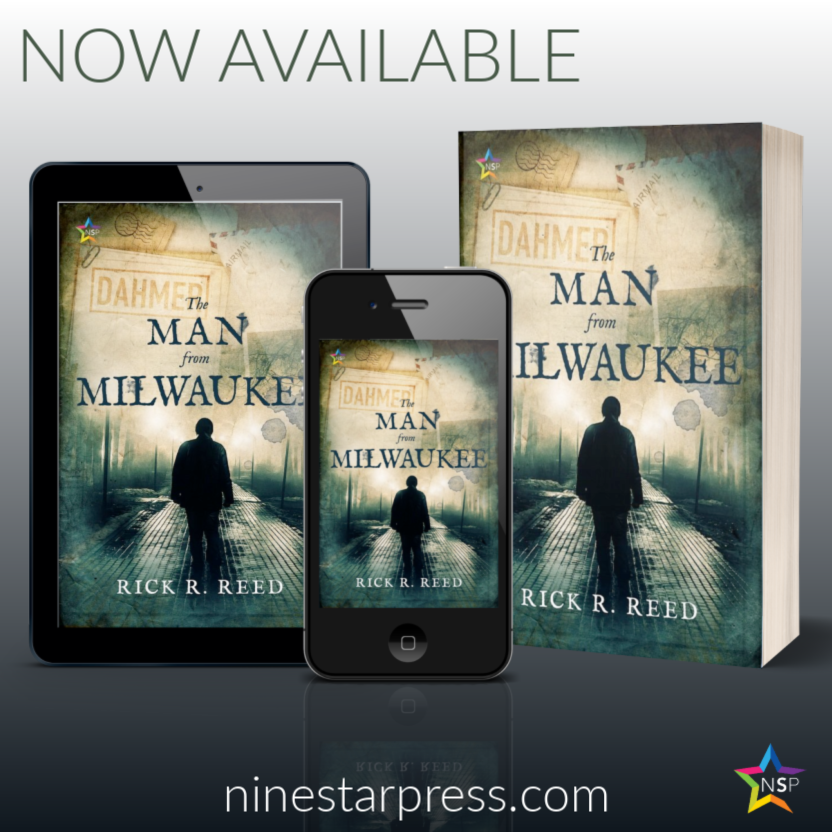
Giveaway + Release Blitz: The Man from Milwaukee by Rick R. Reed


Celebrate the release of The Man from Milwaukee with author Rick R. Reed & IndiGo Promotions. Find out more about this horror/thriller, watch a video & enter the giveaway for a $10 NineStar Press gift code too! 


Title: The Man from Milwaukee
Author: Rick R. Reed
Publisher: NineStar Press
Release Date: July 20, 2020
Heat Level: 3 - Some Sex
Pairing: Male/Male
Length: 64500
Genre: Horror/Thriller, LGBTQIA+, horror, mental illness, grief, virgin/first time, Jeffrey Dahmer, HIV, AIDS

Add to Goodreads

Synopsis


It’s the summer of 1991 and serial
killer Jeffrey Dahmer has been arrested. His monstrous crimes inspire dread
around the globe. But not so much for Emory Hughes, a closeted young man in
Chicago who sees in the cannibal killer a kindred spirit, someone who fights
against the dark side of his own nature, as Emory does. He reaches out to
Dahmer in prison via letters.

The letters become an escape—from
Emory’s mother dying from AIDS, from his uncaring sister, from his dead-end job
in downtown Chicago, but most of all, from his own self-hatred.

Dahmer isn’t Emory’s only lifeline as he
begins a tentative relationship with Tyler Kay. He falls for him and, just like
Dahmer, wonders how he can get Tyler to stay. Emory’s desire for love leads him
to confront his own grip on reality. For Tyler, the threat of the mild-mannered
Emory seems inconsequential, but not taking the threat seriously is at his own
peril.

Can Emory discover the roots of his own
madness before it’s too late and he finds himself following in the footsteps of
the man from Milwaukee?

Excerpt


The Man from Milwaukee
Rick R. Reed © 2020
All Rights Reserved

Headlines

Dahmer appeared before you in a five
o’clock edition, stubbled dumb countenance surrounded by the crispness of a
white shirt with pale-blue stripes. His handsome face, multiplied by the
presses, swept down upon Chicago and all of America, to the depths of the most
out-of-the-way villages, in castles and cabins, revealing to the mirthless
bourgeois that their daily lives are grazed by enchanting murderers, cunningly
elevated to their sleep, which they will cross by some back stairway that has
abetted them by not creaking. Beneath his picture burst the dawn of his crimes:
details too horrific to be credible in a novel of horror: tales of cannibalism,
sexual perversity, and agonizing death, all bespeaking his secret history and preparing
his future glory.

Emory Hughes stared at the picture of
Jeffrey Dahmer on the front page of the Chicago Tribune, the man in Milwaukee
who had confessed to “drugging and strangling his victims, then dismembering
them.” The picture was grainy, showing a young man who looked timid and tired.
Not someone you’d expect to be a serial killer.

Emory took in the details as the L swung
around a bend: lank pale hair, looking dirty and as if someone had taken a comb
to it just before the photograph was snapped, heavy eyelids, the smirk, as if
Dahmer had no understanding of what was happening to him, blinded suddenly by
notoriety, the stubble, at least three days old, growing on his face. Emory
even noticed the way a small curl topped his shirt’s white collar. The L
twisted, suddenly a ride from Six Flags, and Emory almost dropped the
newspaper, clutching for the metal pole to keep from falling. The train’s
dizzying pace, taking the curves too fast, made Emory’s stomach churn.

Or was it the details of the story that
were making the nausea in him grow and blossom? Details like how Dahmer had
boiled some of his victim’s skulls to preserve them…

Milwaukee Medical Examiner Jeffrey
Jentzen said authorities had recovered five full skeletons from Dahmer’s
apartment and partial remains of six others. They’d discovered four severed
heads in his kitchen. Emory read that the killer had also admitted to
cannibalism.

“Sick, huh?” Emory jumped at a voice
behind him. A pudgy man, face florid with sweat and heat, pressed close. The
bulge of the man’s stomach nudged against the small of Emory’s back.

Emory hugged the newspaper to his chest,
wishing there was somewhere else he could go. But the L at rush hour was
crowded with commuters, moist from the heat, wearing identical expressions of
boredom.

“Hard to believe some of the things that
guy did.” The man continued, undaunted by Emory’s refusal to meet his eyes.
“He’s a queer. They all want to give the queers special privileges and act like
there’s nothing wrong with them. And then look what happens.” The guy snorted.
“Nothing wrong with them…right.”

Emory wished the man would move away.
The sour odor of the man’s sweat mingled with cheap cologne, something like Old
Spice.

Hadn’t his father worn Old Spice?

Emory gripped the pole until his
knuckles whitened, staring down at the newspaper he had found abandoned on a
seat at the Belmont stop. Maybe if he sees I’m reading, he’ll shut up. Every
time the man spoke, his accent broad and twangy, his voice nasal, Emory felt
like someone was raking a metal-toothed comb across the soft pink surface of
his brain.

Neighbors had complained off and on for
more than a year about a putrid stench from Dahmer’s apartment. He told them
his refrigerator was broken and meat in it had spoiled. Others reported hearing
hand and power saws buzzing in the apartment at odd hours.

“Yeah, this guy Dahmer… You hear what he
did to some of these guys?”

Emory turned at last. He was trembling,
and the muscles in his jaw clenched and unclenched. He knew his voice was
coming out high, and that because of this, the man might think he was queer,
but he had to make him stop.

“Listen, sir, I really have no use for
your opinions. I ask you now, very sincerely, to let me be so that I might
finish reading my newspaper.”

The guy sucked in some air. “Yeah,
sure,” he mumbled.

Emory looked down once more at the
picture of Dahmer, trying to delve into the dots that made up the serial
killer’s eyes. Perhaps somewhere in the dark orbs, he could find evidence of
madness. Perhaps the pixels would coalesce to explain the atrocities this
bland-looking young man had perpetrated, the pain and suffering he’d caused.

To what end?

“Granville next. Granville will be the
next stop.” The voice, garbled and cloaked in static, alerted Emory that his
stop was coming up.

As the train slowed, Emory let the
newspaper, never really his own, slip from his fingers. The train stopped with
a lurch, and Emory looked out at the familiar green sign reading Granville.
With the back of his hand, he wiped the sweat from his brow and prepared to
step off the train.

Then an image assailed him: Dahmer’s
face, lying on the brown, grimy floor of the L, being trampled.

Emory turned back, bumping into
commuters who were trying to get off the train, and stooped to snatch the
newspaper up from the gritty floor.

Tenderly, he brushed dirt from Dahmer’s
picture and stuck the newspaper under his arm.

*

Kenmore Avenue sagged under the weight
of the humidity as Emory trudged home, white cotton shirt sticking to his back,
face moist. At the end of the block, a Loyola University building stood
sentinel—gray and solid against a wilted sky devoid of color, sucking in July’s
heat and moisture like a sponge.

Emory fitted his key into the lock of
the redbrick high-rise he shared with his mother and sister, Mary Helen. Behind
him, a car grumbled by, muffler dragging, transmission moaning. A group of four
children, Hispanic complexions darkened even more by the sun, quarreled as one
of them held a huge red ball under his arm protectively.

As always, the vestibule smelled of
garlic and cooking cabbage, and as always, Emory wondered from which apartment
these smells, grown stale over the years he and his family had lived in the
building, had originally emanated.

In the mailbox was a booklet of coupons
from Jewel, a Commonwealth Edison bill, and a newsletter from Test Positive
Aware. Emory shoved the mail under his arm and headed up the creaking stairs to
the third floor.

Purchase

NineStar Press | Amazon ebook | Amazon Paperback


Meet the Author

Real Men. True Love.


Rick R. Reed is an award-winning and bestselling author of more than fifty works of published fiction. He is a Lambda Literary Award finalist. Entertainment Weekly has described his work as “heartrending and sensitive.” Lambda Literary has called him: “A writer that doesn’t disappoint…” Find him at www.rickrreedreality.blogspot.com. Rick lives in Palm Springs, CA, with his husband, Bruce, and their fierce Chihuahua/Shiba Inu mix, Kodi.


Facebook | Twitter | Instagram

Giveaway

a Rafflecopter giveaway


Blog Button 2

Release Blitz + Giveaway: Power Inversion (The Evanstar Chronicles #2) by Sara Codair


Power Inversion (The Evanstar Chronicles #2) is out from NineStar Press! Author Sara Codair and IndiGo Marketing host today's release blitz for the latest in the paranormal series. Enter in the $10 NSP credit giveaway!

Title: Power Inversion
Series: The Evanstar Chronicles, Book Two
Author: Sara Codair
Publisher: NineStar Press
Release Date: June 22, 2020
Heat Level: 1 - No Sex
Pairing: M/NB
Length: 84500
Genre: Paranormal, LGBTQIA+, Dark, Demons, Angels, Fae/fey/fairies/faeries, Psychic ability Mental illness, #ownvoices, Established couple

Add to Goodreads

Synopsis

Do you have to be a monster to fight one?

Erin Evanstar is a demon hunter, a protector of humanity from nightmarish predators that feed on people’s fears and flesh. They are settling into their dual life of being a teen and hunting demons.

When a tentacled horror abducts Erin’s partner, José, Erin and their family go on the hunt to get him back. But Erin gets an ultimatum: help the Fallen Angels bring on the apocalypse or watch José die. Erin will do anything to save José, but fighting monsters comes with a grim price–becoming one themselves.

Excerpt

Power Inversion
Sara Codair © 2020
All Rights Reserved

“Prophecies are fickle and convoluted. People tried telling me that for centuries, but I still sought out the most renowned seers, Elven and Human alike. It wasn’t until I miscarried the twins and started having visions on my own did I realize how unreliable an art prophecy is.

Thankfully, the visions faded after I delivered Liam and Lucy because they caused me more stress than anything else.

I could tell Liam this a thousand times, but if he is anything like me, he won’t realize it until he experiences it. Let him follow his dreams until he discovers they are hardly probabilities, let alone definite futures. In the meantime, don’t worry over much of what he tells you. Seeing himself die the same way more than once makes it less likely to happen.”

—A letter from Niben to Seamus Evanstar, confined to the archives shortly after Liam died.

White graduation caps fell from the sky like flakes of vaporized Demon. High school was a beast, and I’d vanquished it like every monster I’d fought, with one exception—myself.

This moment deserved savoring.

Breathing deliberately, I slowed my perception of time until the caps seemed as if they were falling through cold honey on their way to the ground.

The late-spring sun beat down on me, but a breeze kept the temperature bearable. Some tassels lilted southeast—away from the towering clouds bruising the northwest sky. The weather wasn’t going to hold much longer, but I was okay with that. Thunderstorms awoke something wild in me—a pulse-racing, dance-around-like-no-one-can-see-you kind of wild—a rush of adrenaline almost as good as what I’d get from battling a Troll or sparring with Mel.

With my sense of time slowed down, the distant thunder sounded like a lion purring. The clouds glowed purple as lightning forked through them like an X-ray, temporarily revealing a mass of tentacles undulating in the clouds.

Mel, did you see that? I thought as loudly as I could, hoping my telepathic cousin would hear me.

I’d seen a lot of different Demons in the three months I’d been hunting them, but based on the stories and the Lexicon, the massive tentacled ones only materialized in oceans, and they certainly could not fly. Yet, every time lightning flashed, there they were, waving as if violent updrafts were a gentle breeze.

My heart sped up. My hands closed into fists. Mel didn’t reply.

I shut my eyes, opening my mind so I could feel all the energy around me. Most humans were blobs of buzzing heat, but Mel, a hybrid of human, Angel, and Elf, had a hotter, more intense aura with a spritz of simultaneously depressed and optimistically peppy texture. I found her near my Elven grandmother, who felt like a condensed thunderstorm.

Mel? Niben? Can you hear me? Did you see that?

Of course, there was a good chance they were both shielding. What telepath would have their mind open to other people’s thoughts when there were so many other people around?

One who hasn’t been able to properly shield in months. Mel’s melodic yet squeaky voice was a welcome presence in my mind. Shut down the hyper drive. You’re giving me a headache.

I exhaled over the course of ten seconds, willing my sense of time back to normal.

A garbled din of stretched-out voices morphed to something more akin to a clattering avalanche of pots and pans. A shoulder jostled mine. The corner of a graduation cap crashed into my head.

Erin? What had you wanted to tell me?

There were tentacles in the clouds, I thought at Mel, turning in the general direction I sensed her in.

I crashed into José, who, of course, stood right next to me.

“You okay?” he asked. Tears glistened in his midnight eyes and trickled down his sun-kissed cheeks. One snagged on the crooked tip of his nose. He clutched two graduation caps, his and mine, so tight that the scars on his knuckles were visibly stretched.

“Yeah. Are you?” I wondered if I should tell him what I’d seen. He’d been hunting Demons longer than me, but he also thrived on keeping school and the supernatural as two separate entities. And what if they hadn’t been tentacles? What if the storm had just appeared that way with the lightning in slow motion? I didn’t want to ruin his day if there wasn’t an actual threat.

“I’ll miss everyone.” He stuffed the caps under his arms and hugged me. While I wanted to celebrate because I’d made it out alive, he mourned the loss of a place that had been a haven to him for four years.

I leaned my head on his shoulder, listening to his heartbeat, trying to let his steady warmth calm the worry growing in my mind. José’s body was a rock in the sense that it was hard and athletic, but also because it anchored me when I felt as if my mind was running away.

Have you ever watched a storm with time slowed that much? asked Mel.

I shook my head before I remembered there were dozens of people between her and me. No. Do storm clouds in slow motion look like tentacles?

José kissed my hair and whispered, “Are you talking to Mel?”

I nodded.

“Is she okay?”

“She’s having trouble shielding. We should go meet up with her and the others anyway.” I stepped away from him and walked uphill.

Students, who wore white graduation robes, and their parents, who were dressed mostly in summer dresses, slacks, and collared shirts, were clumped all over Saint Patrick’s sprawling lawn.

José draped his arm over my shoulder as I wove around groups of people. The pressure was calming, lulling panic monsters back to sleep with its warm weight. I glanced up at the clouds. They were closer and darker. The wind sped up, stealing programs from a dozen people’s hands. The clouds lit up with lightning, but I didn’t see any tentacles.

Mel’s voice popped back into my head. I don’t sense anything in the clouds, and neither does Niben. I guess she’s been restraining the storm for half the ceremony. Perhaps you were seeing her power mingled with it?

Maybe. Some tension unraveled from my chest. I’d heard stories about my grandmother, Niben, controlling storms, but I’d never seen her do it. In fact, I’d never witnessed her do any magic unless she was modeling something she wanted me to try. She’d come on a few hunts, but she’d just watched with her unblinking feline eyes and later quizzed me on what I did right and wrong. For all I knew, her fabled storm magic could resemble tentacles.

Her magic manifests as roots or vines. Don’t let her hear you compare it to tentacles.

Mel’s bell-like laugh tickled my ears. I followed the sound around a large family and found Mel giggling under my favorite oak tree wearing a white-and-blue-floral maxi dress that covered her feet and touched the ground.

Once upon a time, looking directly at my cousin with my Sight open, my ability to see around illusions would’ve left me seeing spots, but today, only a dull thin haze of white light surrounded her. Rippled pink scars covered half her face, and her hair, once down to her waist, was just starting to regrow.

“You made it. Congrats.” Mel pushed herself off the tree and hugged me, followed by Grandpa and Niben, who had been standing to the left of her.

“Where’d everyone else go?” I asked. Mike, my aunty Lucy (Mel’s mom), and my aunt Rita (my mother’s sister) had been here earlier.

“They decided to go in before the storm got too close,” said Mel. Mentally, she added, Mom and Niben kept debating how long it was safe to hold the storm off for.

Is there anything those two don’t argue about? I thought back to Mel.

I’m happy my mother and grandmother are talking at all. For years after your dad died, they didn’t. Mel winked at me and shrugged.

“Congratulations.” Grandpa hugged me. He was as dressed up as he ever got with khaki slacks and a short-sleeved blue button-up shirt. His ocean-colored eyes squinted, and his lips twisted into something halfway between a smile and a scowl: his “why can’t you people talk out loud so I can hear you” face.

Niben, who wore the same dress as Mel only with reddish-orange flowers, glowered at the thunderclouds. Her pointy ears, which appeared as normal ears to humans who couldn’t see around her glamour, twitched. The gusts pulled strands of red hair out of the two buns she’d braided it into. The strands flailed around like tentacles writhing in the wind.

Maybe I had just seen cords of her power in the clouds. Sometimes, when I saw magical things for the first time, I saw them how my brain could most easily process the latest shift to its reality. The tentacles could’ve been ropes of magic tethering the updrafts and downdrafts.

“That storm is moving in with a vengeance now. Shall we hurry up and take pictures before we are all drenched?” Niben turned her back on the thunderheads and pulled a bulky DSLR out of her bag. She loved photography. Apparently, it wasn’t a thing in Faerie, so when she was on Earth, she had to get her picture-taking fix.

“Are you still controlling the storm?” I asked as I stood next to José, watching it over Niben’s shoulder.

She adjusted the focus on her camera. “No. The longer I hold it off, the worse it will be when it hits, and I’ve already restrained that one far longer than I should have.”

The shutter clicked.

“Stand a little closer together, and, José, stop slouching.” She took a few more pictures and asked Mel to go stand where José had been.

I counted as I exhaled, gradually slowing my perception of time, staring at the cloud behind Niben.

Mel smiled at the camera. It’s only a storm.

I slowed my perception more, so when lightning flashed, the cloud remained lit up for a whole seven seconds. There was slow movement in it like drenched, dirty cotton balls shifting in a bag as someone dumped water in it.

Lightning forked again.

Something slithered near the bottom of the cloud and vanished.

Purchase

NineStar Press | Amazon

Meet the Author

Sara Codair lives in a world of words, writing fiction in every free moment, teaching writing at a community college and binge-reading fantasy novels. When not lost in words, Sara can often be found hiking, swimming, or gardening. Find Sara’s words in Alternative Truths, Helios Quarterly, and Secrets of the Goat People, at https://saracodair.com/

Facebook | Twitter | Instagram | Pinterest

Giveaway

a Rafflecopter giveaway


Blog Button 2

Release Blitz + Giveaway: Jeff, Karma, and Me by Jere’ M. Fishback


Author Jere’ M. Fishback and IndiGo Marketing celebrate the release of Jeff, Karma, and Me! Find out more about this new adult story and enter in the $10 NineStar Press credit giveaway!


Title: Jeff, Karma, and Me
Author: Jere’ M. Fishback
Publisher: NineStar Press
Release Date: February 24, 2020
Heat Level: 3 - Some Sex
Pairing: Male/Male
Length: 90400
Genre: Contemporary, LGBTQIA+, contemporary, new adult, gay, bi, absent parent, mental illness, campground, Florida, Indiana, college students, multiple partners, coming out

Add to Goodreads

Synopsis

Twenty-year-old college student, Jakub Mazur, is a loner consumed by feelings of helplessness due to his mother’s unexplained disappearance many years before. He feels he’s not in charge of his own life, that forces beyond his control will always determine his destiny. But when a summer affair ignites between Jakub and Jeff Brucelli, Jakub tastes both romantic love and self-empowerment.

After returning to school for his third year of college, Jakub suffers another tragic loss; it shakes his faith in his ability to navigate life’s challenges. Is he doomed to suffer at the hand of fate forever?

When Jeff is diagnosed with Hodgkin’s Lymphoma, a potentially fatal cancer of the lymphatic system, Jeff’s oncologist says he must endure debilitating chemotherapy cycles, then radiation treatments. Jakub is devastated when he learns of this, but decides, for once, he will take control of his future instead of behaving like a helpless bystander.

Excerpt

Jeff, Karma, and Me
Jere’ M. Fishback © 2020
All Rights Reserved

I was twenty years old when Jeff Brucelli walked into my life and turned it upside down. I had just finished my sophomore year of college and was home for summer break, to live with my dad in the head ranger’s residence in Fort De Soto Park, a county facility fronting Tampa Bay and the Gulf of Mexico. Dad oversaw the park’s campground, as well as the picnic areas, boat ramps, piers, and beaches. Our house was a two-bedroom, wood frame structure seated on nine-foot pilings, with a screened porch overlooking a placid bayou. The floors were polished oak, and the wood burning fireplace was built of local limestone. A wooden dock and covered boat slip extended into the bayou, where Dad kept a sixteen-foot Carolina Skiff with a forty-horsepower outboard.

My first morning home, I gobbled a bowlful of cornflakes and chugged OJ from a carton. Then I took a bike ride through the RV section of the campground. The sun had risen two hours before and already the day heated up. Dampness gathered in my armpits while I pedaled along the crushed shell road. Most campsites I passed were waterfront, shaded by live oaks and sabal palms. Native foliage grew between them: sea grape, hibiscus, turkey oaks, and flame of the woods.

Many sites were empty, but at one near the eastern tip of the campground, an RV the size of a city bus hulked. A guy my age sat there at a picnic table, strumming an acoustic guitar. Shirtless and wearing cutoff denim shorts, he was slender and fair-skinned, and his cola-colored eyes narrowed when I approached on my bike.

“Are you staying here?” I asked.

Sunlight reflected in his mop of dark and wavy hair when he nodded and answered in a scratchy tenor. “My folks are serving as campground hosts the next few months. They’re both schoolteachers and have the summer free, so we’ll be here through August.”

I dismounted and lowered my kickstand. Then I pointed my chin at the RV. “That’s a nice ride.”

“It belongs to my mom’s parents. Grandma’s not well these days, and they don’t use it much, so they lent it to us for this trip. We’re from Indiana.”

I extended a hand. “I’m Jakub Mazur.”

Jeff told me his name while we shook. His palm felt warm, his grip firm.

I explained how I was home for the summer from Florida State University and living inside the park.

“I just finished my second year at IU,” Jeff said. “I’m a journalism major.”

Jeff glanced here and there before he spoke again, this time in almost a whisper. “We’ve only been here a few days, but I get the impression most people in the campground are older—retirees and the like.”

I rolled my eyes. “You won’t find many college kids here, but we can hang out if you’d like. Got a bicycle?”

Jeff jerked a thumb toward a ten-speed Schwinn chained to a sabal palm.

“Let’s take a cruise,” I said, “and I’ll show you my house.”

Minutes later we rolled westward, side by side, while our tires ground against the road. We passed beneath limbs of ancient live oaks draped in Spanish moss. Up ahead, at an empty campsite, a great grey heron stood on a seawall, studying a canal in hopes of finding breakfast.

“How long have you lived in the park?” Jeff asked.

“Since I was eight, when my dad was promoted to head ranger. The residence comes with the position.”

“Must be nice.”

I rocked my head from side to side. “The park’s pretty, and fishing here is good, but I never had other kids to do things with. It could get lonely, especially during summer when I wasn’t in school. The days dragged by, if you know what I mean.”

Jeff grimaced. “I spent a summer on my uncle’s dairy farm, when I was thirteen. The nearest kid my age was three miles away, and I thought I’d go crazy from boredom.”

When we reached the house, I pulled two Cokes from the fridge, and we sat on a glider sofa on the screened porch. Above us, a ceiling fan clacked and stirred the air. Out on the bayou’s placid surface, a half dozen brown pelicans floated while an osprey chattered in a nearby long leaf pine.

“This is sweet,” Jeff said while his gaze traveled here and there. “We don’t have such places back home. Indiana’s nothing but prairie.”

Jeff talked about his hometown of Peru.

“We have about ten thousand people. There’s a courthouse and high school, and it’s only a three-hour drive from Bloomington, so I can come home on weekends if I choose to, but I don’t often. There’s not much going on in Peru.”

I asked Jeff about his family.

“My dad’s a middle school shop instructor, and Mom teaches freshman English at Peru High. They come from large families, so I have aunts and uncles all over Miami County, loads of cousins as well.”

I shook my head.

“What is it?” Jeff asked.

“My parents were both only children, so I have no extended family or siblings. It’s just me and my dad.”

“Where’s your mom?”

I kept my gaze fixed on the bayou while my stomach knotted like it always did when I had to explain. “She has…mental health issues. About eleven years ago, she disappeared—just packed up her belongings and left. We haven’t heard from her since.”

“Damn, that had to be rough.”

“My dad nearly lost his mind. Even today, I don’t think he’s fully recovered from the situation.”

We rocked on the glider for a bit without saying anything more until Jeff rose.

“I need to help my folks with servicing restrooms, but after lunch why don’t we do something together, maybe go to the beach and take a swim?”

“Sounds good,” I said while following Jeff out of the front door.

After he climbed aboard his Schwinn, he raked a hand through his hair, and I noticed his slightly oversized nose had a few freckles on it. Then, while he pedaled away, I wondered if I’d found someone I could share my summer with.

Purchase

NineStar Press | Amazon | Smashwords | Barnes & Noble | Kobo


Meet the Author

Jere’ M. Fishback is a former journalist and trial attorney. He lives on a barrier island on Florida’s Gulf coast, where he enjoys watching sunsets with a glass of wine in his hand and a grin on his face.

Website | Facebook

Giveaway

a Rafflecopter giveaway


Blog Button 2